International
Cirque du Soleil in New Zealand: the Tours and the Venues
An occasional visitor, and the reference point for everything else.
For most New Zealanders, Cirque du Soleil is simply the mental image that the word circus produces. That is a slightly odd situation for a Canadian company which visits only occasionally, and it quietly shapes what audiences here expect from every other circus show they subsequently go on to see.
The company has toured here more than once over the years, staging its productions in the largest venues the whole country can offer. Visits are irregular rather than seasonal, which is entirely unsurprising given the freight, crew and staging costs involved in moving a production of that size this far.
How the touring model works here
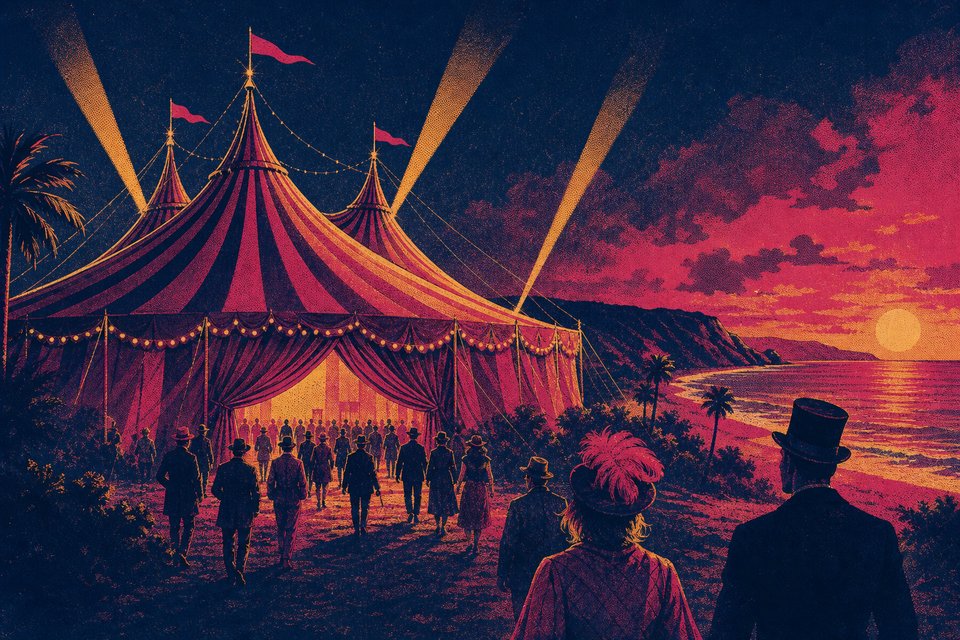
Two formats reach this part of the world, and they offer noticeably different experiences. Arena tours adapt a production to fit existing indoor venues built for other purposes, while big-top tours bring their own structure with them and pitch it on a suitable site for a run of several weeks.
The big-top format is the more faithful of the two to how the work was originally conceived, but it is far more expensive to move and to erect. That is exactly why arena adaptations are the more common way a production eventually reaches smaller and more geographically distant markets like this one.
Arena adaptation against big-top tour
Two formats reach this part of the world and they are not the same experience, though they are marketed under the same name. Knowing which one is coming tells you roughly what the staging will be capable of, and it explains why some productions never travel this far south at all.
| Arena tour | Big-top tour | |
|---|---|---|
| Venue | Existing indoor arena, built for other purposes | The company brings and pitches its own tent |
| Faithful to the original staging | Adapted to fit | Closer to as conceived |
| Cost to move | Lower | Considerably higher |
| Typical run | A few nights | Several weeks on one site |
| More common this far south | Yes | Less often |
What the shows are like
Expect a narrative frame, live music, elaborate costume design and no animals whatsoever. Individual acts are woven into a continuous through-line rather than presented one after another as a sequence of separate turns, and that is the single clearest structural difference between this format and a traditional touring tent show.
The performers are typically former elite athletes who have since acquired additional training in character work and stagecraft on top of their original discipline. That second layer is the company’s actual product, and it is essentially what the considerable ticket price is actually buying an audience on the night itself.
The backgroundThe company’s history, casting and economics are covered in nine facts about Cirque du Soleil.
How it compares with the local scene
The comparison between the two is not really fair in either direction. A production carrying dozens of circus performers and custom-built apparatus operates at a scale no domestic company would ever attempt, while a domestic season carries year-round costs that a visiting international tour simply never has to think about.
What the visits reliably do is widen the paying audience for everything else. A touring production brings people into a tent who would not otherwise attend circus of any kind, and a reasonable share of them go looking for what is on locally once the touring production has moved on.
That is the useful next step for anyone who enjoyed one of those visits. The companies working here perform a great deal more often than an international tour ever visits, and their own season prices are a fraction of what an international touring ticket normally costs anywhere in this country.
Questions people ask
Has Cirque du Soleil toured New Zealand?
Yes. Touring productions have played here on several occasions over the years, staged both in large arenas and under travelling big tops in the three main centres. Visits are occasional rather than annual, which is unsurprising given the freight and crew costs involved in moving a production this far south.
Where do Cirque du Soleil shows take place in New Zealand?
In the largest venues available, which in practice means arenas and purpose-pitched big tops in the main centres rather than conventional theatres. The resident-theatre model the company uses so successfully in Las Vegas has no real equivalent anywhere in this country and almost certainly never will, and the choice of venue is dictated by capacity and rigging height.
How can I find out about a future visit?
Through the company and the venues directly. Tours are announced well ahead of time because tickets go on sale months before opening night, and no third-party listing anywhere will know about a confirmed visit any sooner than the official announcement makes it public, and a venue’s own mailing list is the most reliable early warning.
Is Cirque du Soleil related to New Zealand circus companies?
No, beyond the fact that they share an art form. It is a Canadian producer touring internationally on a very large scale; the companies based here are entirely independent of it and generally work at a different scale, in different venues, for different audiences, and treating one as a benchmark for the other tends to flatter neither of them fairly.